Challenge
Shift user perception around a familiar product category.
A case about breaking a user stereotype and creating a new behavior pattern.
Launching a new product is always a complex challenge with many moving parts:
Shift user perception around a familiar product category.
Developed influencer messaging and selected channels where the audience already trusted creators.
A new behavior pattern introduced through opinion leaders.
finding the right positioning
addressing the concerns of potential buyers
differentiating from the nearest competitors
and so on.
But what do you do when the "competitor" you're up against isn't another product with a similar value proposition — it's an entire cultural assumption that has been hardwired into your target audience's minds for years?
That is exactly the challenge we faced when promoting a new product from our client MMD — the licensed brand owner of Philips Monitors — the Philips Momentum, a 43-inch monitor built for console gaming. The product was truly one of a kind: at the time of launch, it was the first console gaming monitor featuring UltraClear technology, 4K UHD resolution, and VESA's DisplayHDR 1000 certification (guaranteeing exceptional brightness, contrast, and color accuracy).
Our goal was not only to generate demand and drive sales of the new product through partner retailers, but also to dismantle a deeply ingrained association — the idea that console gaming means playing on a TV.
The primary target audience for the Philips Momentum 43′ monitor is console gamers. The monitor also appeals to professionals with high demands on image quality: designers, architects working with CAD software, and finance specialists who regularly deal with large spreadsheets and data visualizations.
The dominant belief among lifestyle gamers — and the one we needed to challenge — was that a regular TV is perfectly adequate for console gaming. Our task was to demonstrate all the advantages a professional gaming monitor offers over other display options.
To reach the gaming audience, we chose the YouTube channels of popular lifestyle and gaming content creators.
YouTube — one of the highest-converting tools available when the goal is driving traffic to a landing page
To reach the remaining segment of our target audience, we turned to one of the most-visited IT sites in the Runet — Trashbox, a publication that regularly covers technology news and produces content that resonates strongly with the second audience segment.
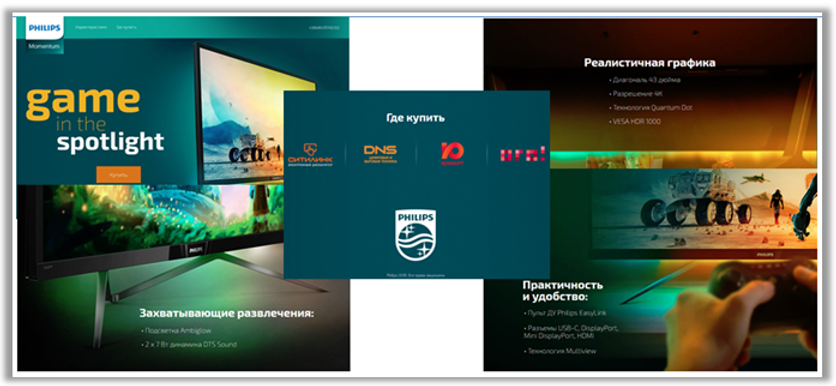
To communicate the monitor's key advantages and create a single traffic hub for the entire campaign, we developed a landing page featuring a compelling breakdown of the product's technical specifications and direct links to the brand's retail partner websites.
For the YouTube campaign, we developed a single unifying concept: we selected several popular lifestyle bloggers who are passionate about console gaming and brought them together around a challenge called "Find Your Favorite Feature of the Philips Momentum" — in which each creator highlighted one specific characteristic of the monitor and passed a virtual baton to the next influencer in the chain.
This approach amplified the reach of every individual video. In each piece of content, the blogger named the next participant in the relay and tagged the previous video — building a connected chain of stories covering all the features and advantages of the new monitor, told by voices that gamers already trust.
In each video, the blogger highlighted the advantages of a dedicated gaming monitor over a standard TV for console gaming.
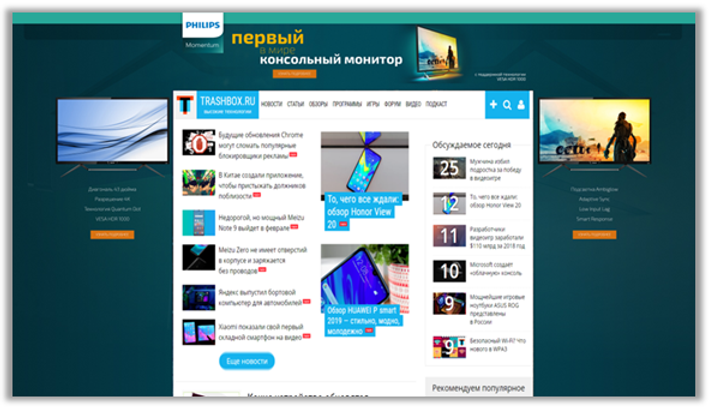
To reach the remaining audience segment — geeks and IT enthusiasts — we ran a branded takeover on Trashbox, centering the creative around one of the monitor's most compelling features: its DisplayHDR 1000 certification from VESA. This delivered additional campaign reach and drove further traffic to the landing page.
Over the 10-day campaign, the YouTube reviews generated
3,336,512 views
27,364 clicks through to the landing page
Philips Momentum sales increased tenfold, and one of the largest online retailers sold out its entire available stock during the campaign.
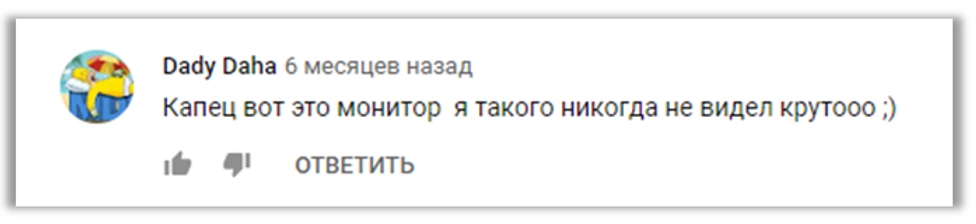
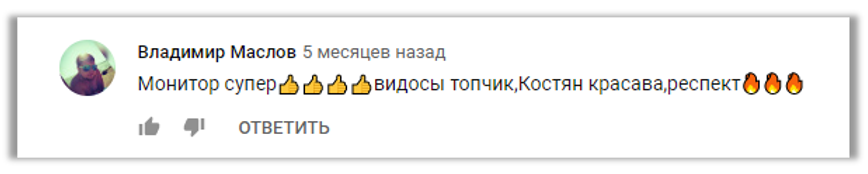
The review videos generated a wave of positive comments from prospective buyers — including remarks from users who said the content had changed their mind about needing a TV for gaming.


We succeeded in dismantling a deeply held audience stereotype by delivering a consistent message through influencers. The audiences of our selected creators overlapped in part, and every one of them communicated the same core message: Philips monitors are far superior to TVs for console gaming.
Our primary campaign objective — shifting the entrenched narrative that says "I don't need a gaming monitor when I have a TV!" — was achieved.
At the same time, each creator packaged the message in their own way, so viewers never felt they were hearing the same scripted ad repeated. The bloggers each spotlighted the monitor's advantages over a TV through their own lens, sharing a genuine personal perspective while staying true to the central campaign message.
Through our own work, we demonstrated once again that a well-chosen idea, packaged the right way and delivered through credible opinion leaders, has the power to shift deeply held audience beliefs.
Want results like these?
Get in touch at welcome@itcomms.io

A campaign focused on increasing sales during a low season.
A storytelling case about building a stronger sales advantage.
A communications case about changing how a professional audience sees a brand.